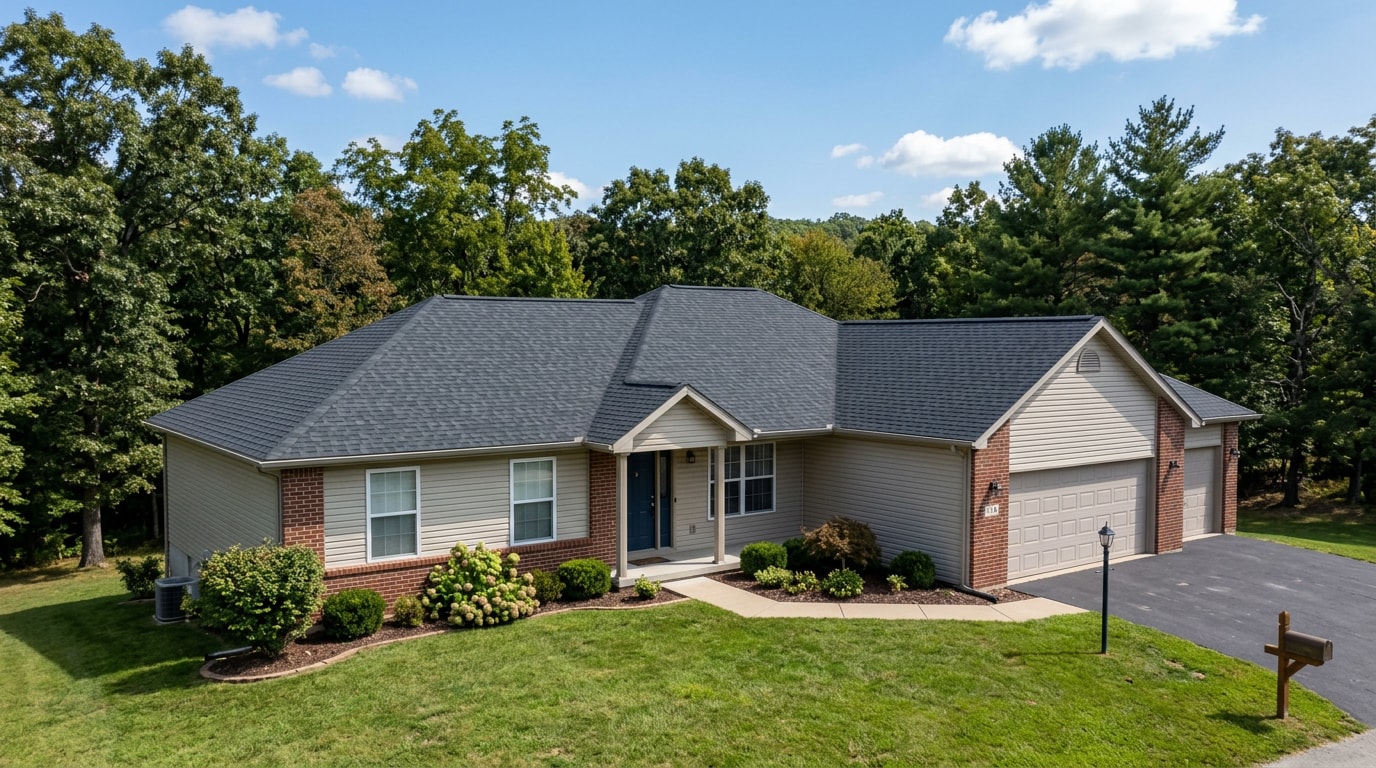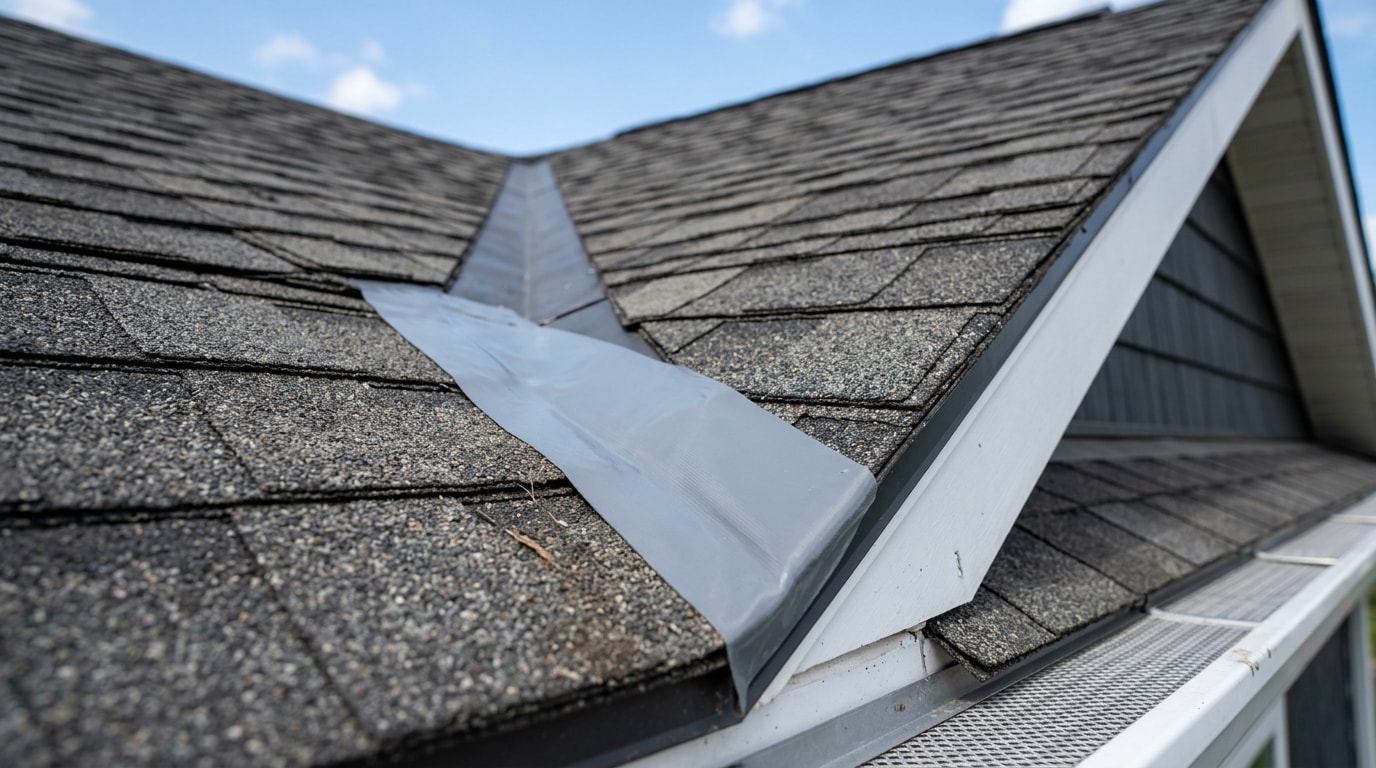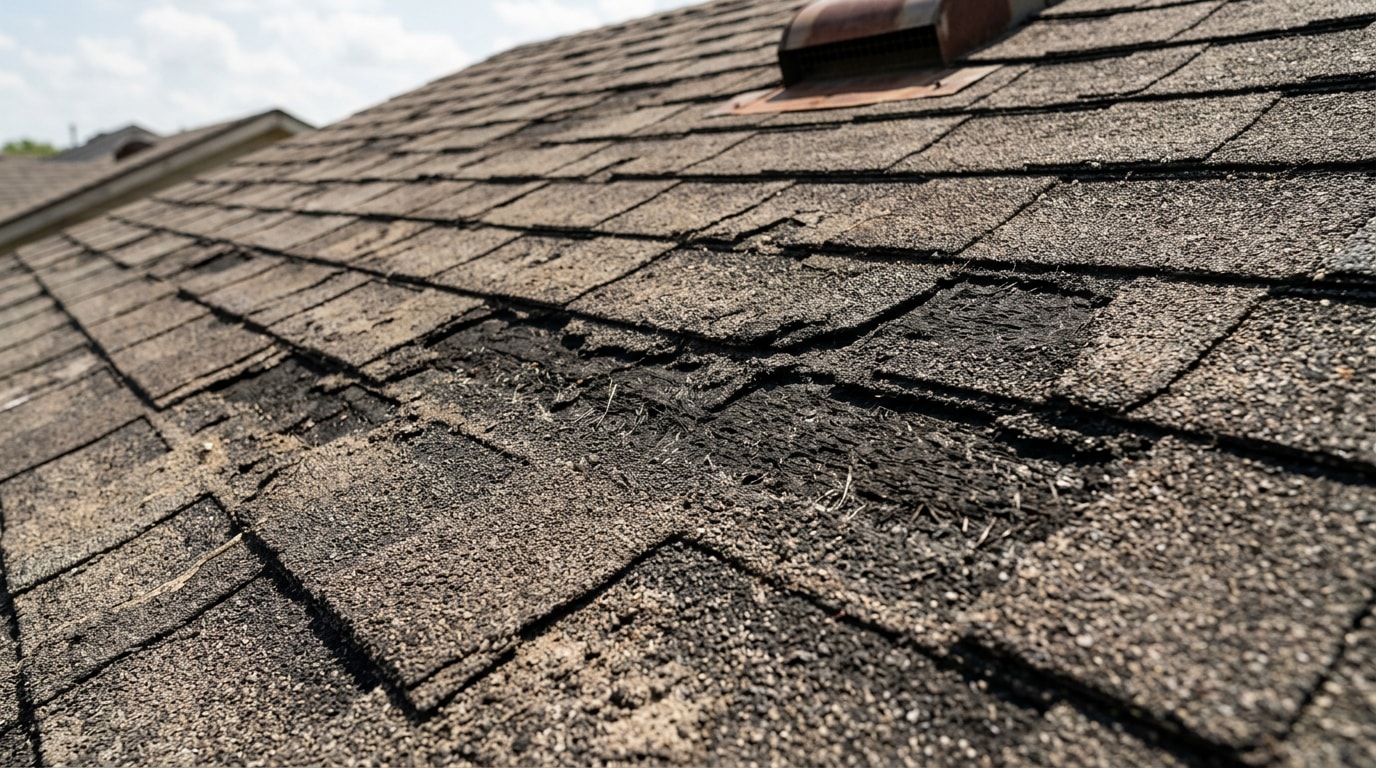
Roofing granules in West Plains, MO gutters are usually nothing to worry about, especially on a newer roof. But heavy, repeated shedding is one of the earliest signs that your shingles are starting to fail. Here's how to tell the difference before a small problem turns into a leak.
What Roofing Granules Actually Do
Roofing granules are the small mineral or ceramic particles pressed into the surface of asphalt shingles during manufacturing. They aren't just cosmetic.
Granules shield the asphalt layer from UV rays, add fire resistance, and give the shingle its color. According to GAF's technical documentation on shingle construction, the granule layer is what helps prevent UV degradation of the asphalt coating underneath it, which is exactly why bare, granule-stripped shingles age so much faster than intact ones.
Once that layer is gone, the asphalt has no defense left. It dries out, becomes brittle, and starts to crack, curl, and eventually leak.
Is Granule Loss Normal?
Yes, light and gradual granule loss is normal. It's most common right after a new roof goes in, and again as a roof nears the end of its service life.
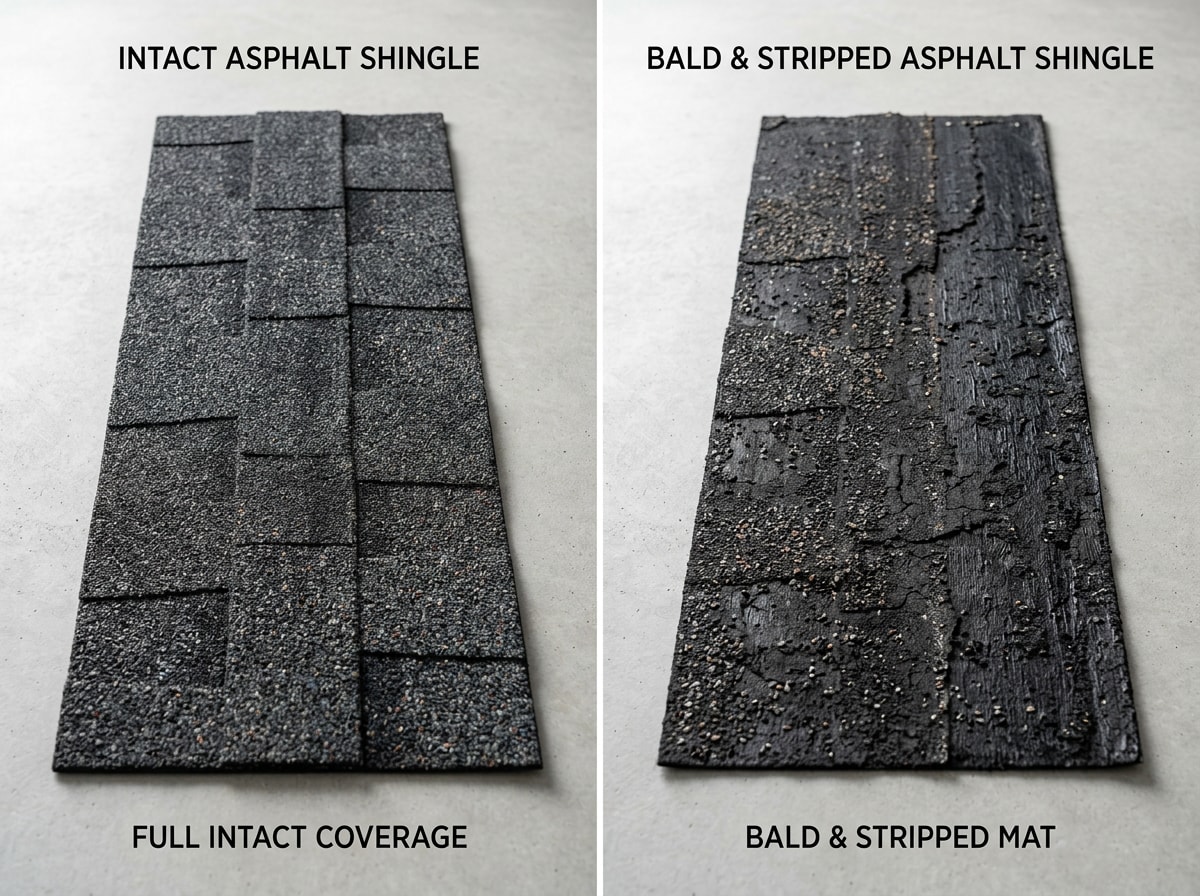
It only becomes a real concern when it's heavy, concentrated in one spot, or paired with bald, shiny patches on the shingle surface.
New shingles are manufactured with a surplus of loose surface granules. Some of that excess sheds during shipping, installation, and the first few good rainstorms. That early shedding should taper off within a matter of weeks.
Mild, occasional granule loss after a routine storm isn't unusual either. The pattern to watch is whether it keeps happening after nearly every rain, which points toward excessive loss rather than a one-time event.
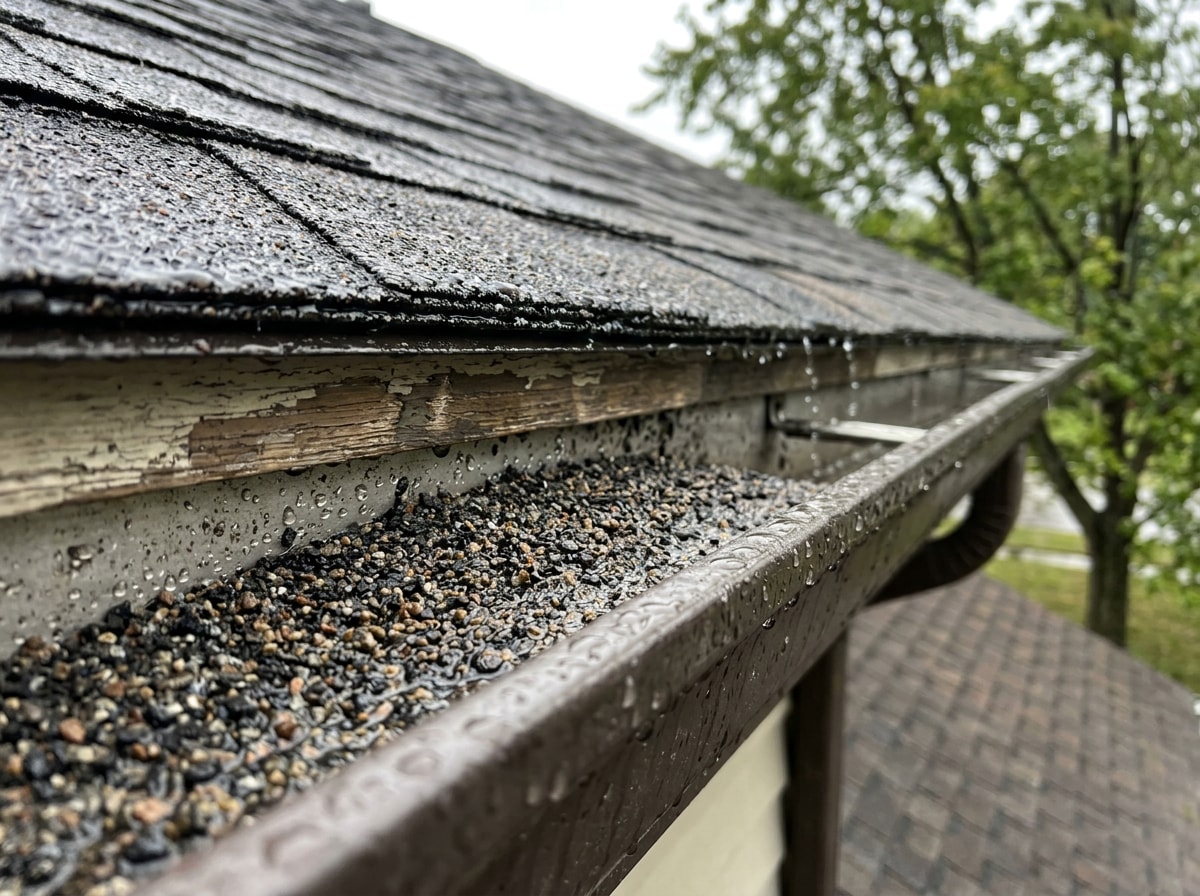
Warning Signs of Excessive Granule Loss
Excessive granule loss looks different from normal shedding. Here's what to look for:
- Bare or shiny patches where the asphalt mat is visible
- Dark spots on the roof surface that keep spreading
- Granules washing out of downspouts after nearly every rain, not just occasionally
- One roof slope losing noticeably more granules than the others
Once a shingle is down to bald spots, it has lost its defense against UV rays, temperature swings, hail, and wind-driven rain. At that point, water infiltration becomes a real possibility instead of a distant risk.
What Causes Granule Loss on a West Plains Roof
Not every case of granule loss has the same root cause. The right response, whether that's watching it, a spot repair, or a full roof replacement, depends on figuring out why it's happening.
New Roof Shedding
Right after a new roof goes in, contractors walk across the shingles during installation, which loosens some of the manufacturing excess granules that were never fully set. That's normal and typically settles within weeks.
If shedding on a new roof hasn't slowed down a month or two after installation, it's worth a call to the roofing company. That pattern can point to an installation issue rather than ordinary settling.
Age and Weathering
As asphalt shingles age, the bond holding granules to the asphalt base gradually weakens. Years of UV exposure dry out that binder, and granule loss tends to become more noticeable as a roof approaches the back half of its lifespan.
This kind of loss is usually gradual and spread evenly across the roof, which helps distinguish it from storm or defect-related loss.
Storm, Hail, and Wind Damage
Severe weather physically knocks granules loose instead of wearing them away slowly. Homeowners often notice a spike in gutter granules right after a hard hailstorm or high-wind event.
This is where a lot of homeowners underestimate how much damage smaller hail can do. A recent peer-reviewed study by the Insurance Institute for Business & Home Safety found that shingles exposed to repeated small, "sub-severe" hailstones became roughly ten times more vulnerable to damage from a later, larger hailstorm. The study also found that granule loss from these smaller impacts leaves the underlying asphalt brittle and prone to faster degradation under UV light, even when the damage isn't obvious from the ground.
That matters in Howell County, where thunderstorms and hail are most frequent from spring into early summer. The University of Missouri Climate Center notes that hail occurs throughout the state in every season except winter, with May producing the highest number of hail days statewide. When our crews inspect West Plains roofs after a spring storm, granule loss is almost always worse on the slope that faced the wind, which is a quick visual cue even before we get on the roof.
If you suspect recent storm damage, it's worth having the roof inspected before filing or skipping an insurance claim. Our storm damage roof repair team can document the damage and tell you honestly whether it's claim-worthy.
Hail Damage vs. Blistering: Telling the Difference
Frequent Ozark storms don't mean every case of granule loss is storm-related. Hail impact and shingle blistering can look similar at a glance, but they come from different causes and call for different next steps.
Hail-caused granule loss:
- Random, scattered impact marks, often circular bruises
- Usually worse on the slope facing the storm direction
- Often paired with dented gutters, downspouts, or AC units
- Typically qualifies as an insurance claim matter
Blistering (ventilation-related) granule loss:
- Small, raised, pimple-like bumps spread across the shingle
- Spread fairly evenly rather than concentrated on one slope
- Tied to trapped moisture or heat in the attic space
- Usually a ventilation or installation fix, not an insurance issue
A contractor who checks both the shingle surface and the attic ventilation can usually tell which one you're dealing with fairly quickly.
Manufacturing Defects and Improper Installation
Blistering can also point to a product defect rather than ventilation, especially on a relatively new roof with properly working attic airflow. In those cases, the shingle may be missing adequate protective coating from the factory.
Flaking, which is patchy and localized rather than evenly spread, is another sign worth flagging to the manufacturer or installer. It often points to a bad batch of shingles or a step that got missed during installation.
How Long Do Shingles Really Last in the Ozarks?
Asphalt shingles are rated for 20 to 30 years under ideal conditions, but West Plains doesn't offer ideal conditions. Summers run hot and humid, winters bring hard freezes, and that swing forces shingles to expand and contract repeatedly. That stress cycle speeds up granule loss and shortens real-world lifespan.
| Shingle Type | Typical Ozarks Lifespan | Granule Loss Pattern |
|---|---|---|
| 3-tab asphalt | 15 to 20 years | Faster, more even wear across the roof |
| Architectural (laminated) asphalt | 25 to 30 years | Slower, thicker granule layer resists UV and hail better |
Homeowners comparing options locally can see what's typical for this specific region on our West Plains, MO service page.
Repair or Replace Granule-Damaged Shingles?
The decision usually comes down to scope.
| Situation | Usual Recommendation |
|---|---|
| A few shingles affected by a fallen branch, foot traffic, or a small hail cluster | Targeted roof repair |
| Bald spots or fiberglass mat visible across large sections | Full replacement |
| Granule loss spread evenly across a roof older than 15 to 20 years | Full replacement |
| Unsure which category applies | Professional roof inspection first |
One thing to avoid regardless of scope: don't try to glue granules back onto a shingle. Once granules detach, that shingle's protective layer is compromised for good, no matter what's applied on top.
What Granule Loss Repairs Typically Cost
Costs vary a lot depending on scope, and every estimate should be based on an actual inspection rather than a guess from the ground.
- Minor spot repairs (a handful of damaged shingles): generally the least expensive option, often a few hundred dollars.
- Emergency tarp installs to protect a roof while a permanent fix is scheduled: typically several hundred dollars up to around $1,500.
- Full roof replacement: usually the largest investment, commonly landing in the $8,000 to $16,000 range for an average home, depending on roof size, pitch, and shingle grade.
When granule loss is visible across most of the roof rather than isolated spots, it's usually time to stop patching and start planning for replacement. It costs more upfront, but it restores full protection and avoids the slow creep of water damage that comes with repeated patch jobs. If the cost of a full tear-off feels out of reach right now, our roofing financing guide for Branson, MO walks through common financing options and what it takes to qualify, most of which apply across our service area.
A free roof inspection and estimate is a reasonable first step before committing either way.
About the Author
This guide was written by the team at Rick's Roofing, a family-owned roofing, siding, gutter, and window contractor serving Springfield, West Plains, Branson, and the surrounding Ozarks region for more than 20 years. Rick's Roofing works directly with local insurance companies on storm damage claims and performs hands-on roof inspections across Howell County year-round. Questions about your specific roof? Contact us for a free, no-obligation estimate.
FAQ
Do New Roofs Lose Granules?
Yes. New asphalt shingles commonly shed some loose manufacturing granules during transport, installation, and the first several rainstorms. This typically tapers off within a few weeks and isn't a sign of a defective roof.
How Much Granule Loss Is Considered Normal?
A small, gradual amount is normal, especially right after a new roof installation or as an older roof approaches the end of its life. Bald patches, consistent piles of granules, or heavy buildup in the gutters after every rain are signs it's no longer within the normal range.
What Does Heavy Granule Loss Mean for My Roof?
Heavy or uneven granule loss usually means the shingle's protective layer is compromised in that area. It leaves the asphalt exposed to UV rays and moisture, which speeds up cracking, curling, and eventually leaking if it isn't addressed.
Will My Warranty Cover Granule Loss?
It depends on the cause. Manufacturer warranties generally cover granule loss tied to a product defect, but not loss from normal aging, foot traffic, or storm impact. Check your paperwork or call the manufacturer directly to confirm what your specific shingle warranty includes.
Should I Try to Repair Granule Loss Myself?
No. There's no reliable DIY fix for granule loss, since gluing granules back on doesn't restore a shingle's protection. A professional can replace individual shingles for small areas, while widespread loss usually calls for full replacement.
How Can I Prevent Premature Granule Loss?
Keep gutters clear so water drains properly, trim overhanging branches that drop debris or scrape shingles, and schedule a professional inspection after any significant hail or wind event. Catching minor damage early is almost always cheaper than waiting for it to spread.
How Much Does It Cost to Fix Shingle Granule Loss?
Costs span a wide range depending on scope. Minor spot repairs tend to be the least expensive option, emergency tarp installs often run into the low thousands at most, and full roof replacements for an average home typically fall between $8,000 and $16,000 depending on size and materials.