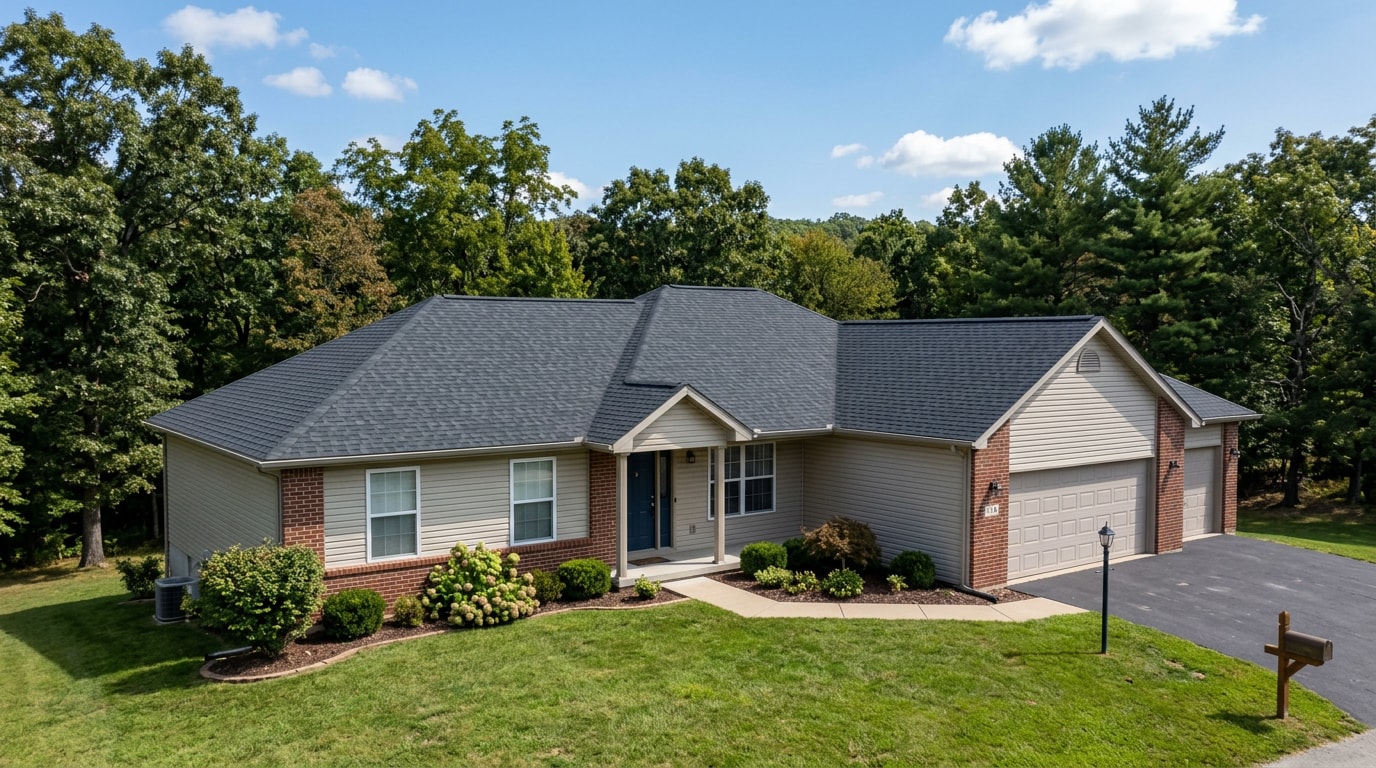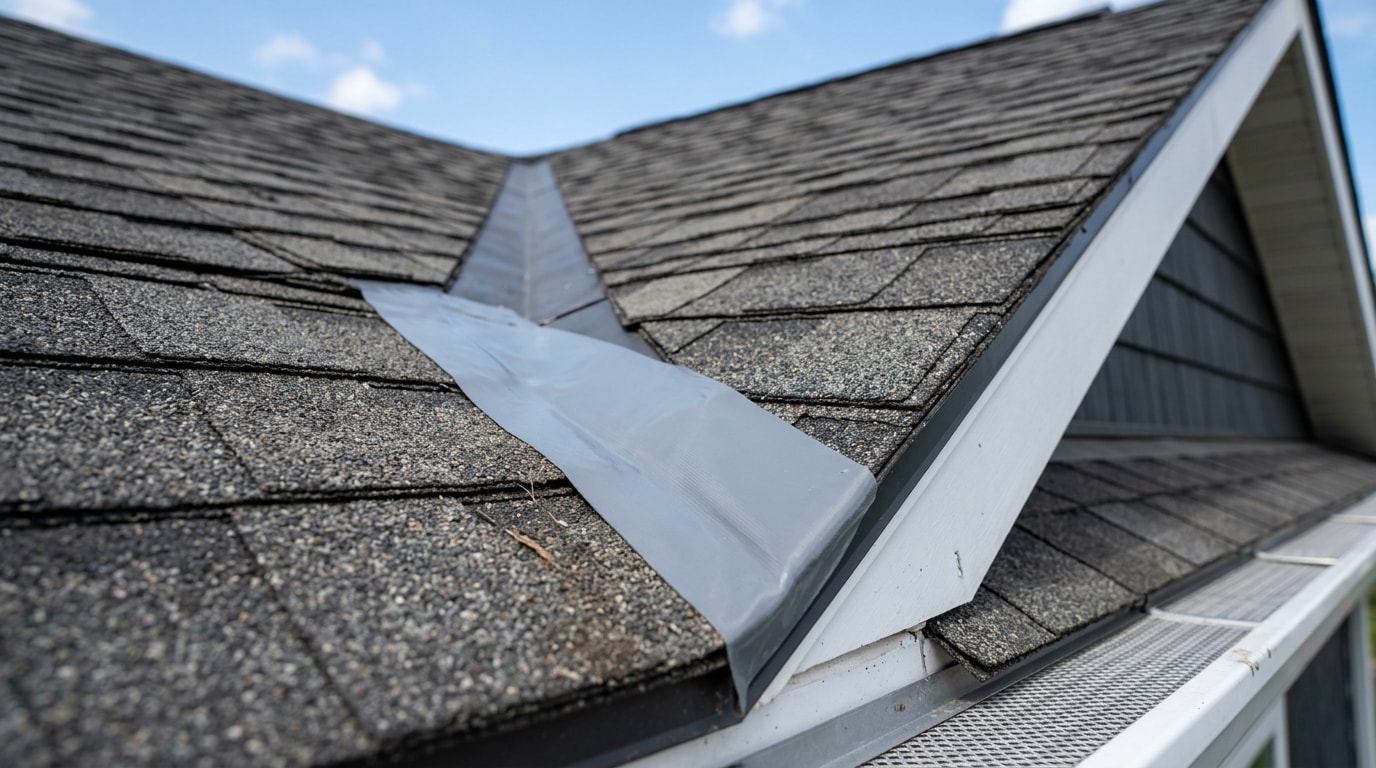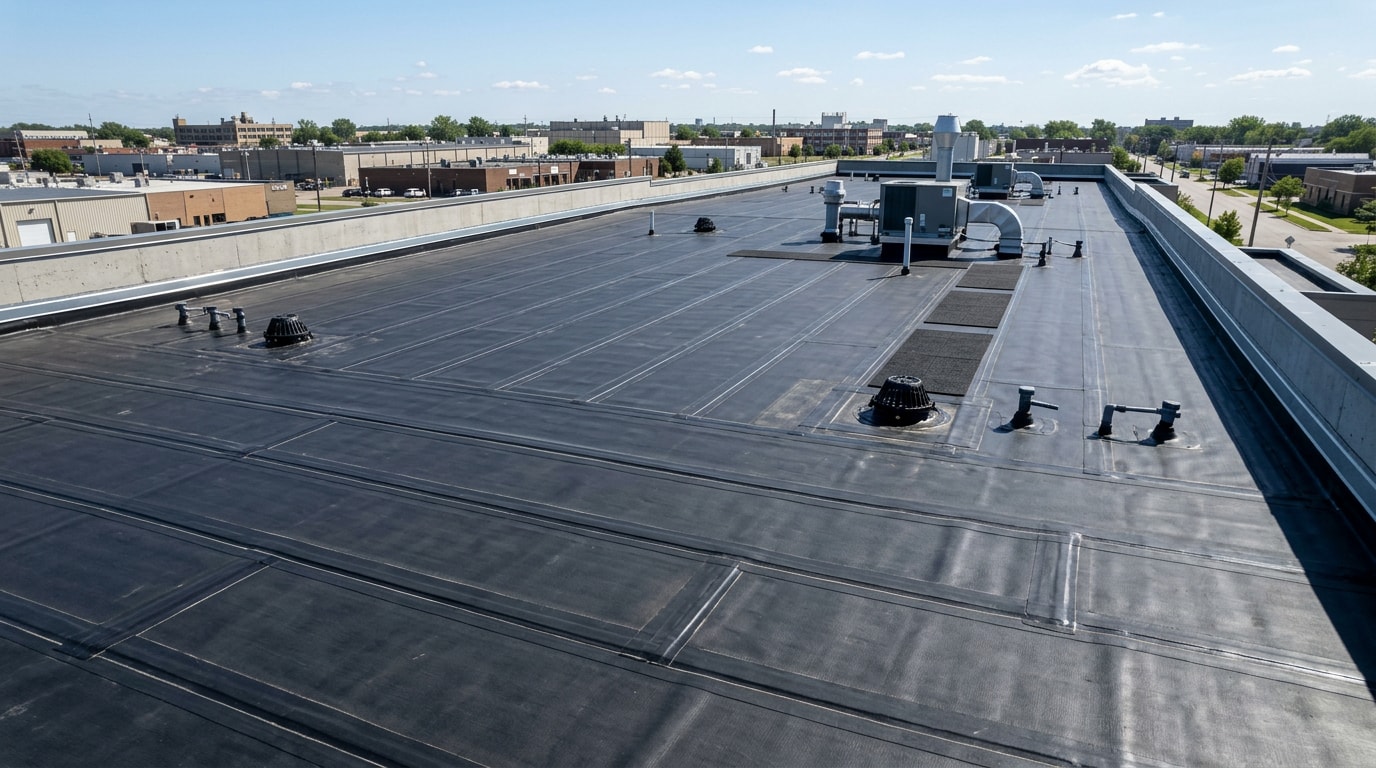
Rubber roofing in Springfield, MO almost always means EPDM, a synthetic rubber membrane built for flat and low-slope roofs. This guide breaks down what it costs to install or repair, how long it actually lasts in southwest Missouri weather, and when a patch makes more sense than a full tear-off.
What Is Rubber Roofing (EPDM)?
EPDM stands for ethylene propylene diene monomer, a synthetic rubber membrane manufactured in large sheets and rolled directly onto a flat or low-slope roof deck. Fewer seams means fewer places for water to find its way in, which is the main reason it has stayed popular on additions, porches, and commercial flat roofs for decades.
EPDM comes in a few standard configurations:
- Thickness: 45-mil (standard), 60-mil (heavy-duty), or 90-mil (commercial-grade), with fleece-backed versions available for extra puncture resistance.
- Color: Black (standard, absorbs heat) or white/reflective (better for cooling costs in sunny climates).
- Attachment method: Fully adhered, mechanically attached, or ballasted with stone.
The EPDM Roofing Association maintains detailed technical specifications on membrane thicknesses, attachment systems, and how each is tested against wind and fire codes, which is a useful reference before comparing contractor quotes.
How Much Does Rubber Roofing Cost in Springfield, MO?
EPDM installation typically runs $4 to $12 per square foot installed, depending on membrane thickness, insulation, and whether the old roof needs to be torn off first. A standard 45-mil system sits at the low end; a fully adhered 90-mil membrane with added insulation pushes toward the top.
| Roof Size | Estimated Installed Cost |
|---|---|
| 500 sq ft | $2,000 – $6,000 |
| 1,000 sq ft | $4,000 – $12,000 |
| 1,500 sq ft | $6,000 – $18,000 |
| 2,500 sq ft | $10,000 – $30,000 |
Three things move the number most on a Springfield quote:
- Tear-off vs. recover. Removing and disposing of the old membrane adds labor and dump fees.
- Insulation. Above-deck polyiso insulation improves energy performance but adds cost per square foot.
- Roof accessibility. Steep driveways, multi-story commercial buildings, and heavy equipment access all affect labor time.
If you're weighing a full replacement against patch repairs, a roof replacement quote from a local crew will give you real numbers based on your actual roof, not a national average. You can also get a free estimate before committing either way.
How Long Does EPDM Roofing Last?
Most EPDM roofs last 20 to 30 years, and well-installed, fully adhered systems with properly sealed seams are documented performing well beyond that in favorable conditions. Install quality and seam type matter more than almost any other factor.
A poorly adhered seam in a harsh climate can fail years before a well-installed one in a milder region. The EPDM Roofing Association's own field research backs this up: a study of five roofs with 28 to 32 years of in-service life found all of them still performing within acceptable physical property ranges. That's a strong argument for paying attention to installation quality over chasing the cheapest quote.
Why Springfield Weather Puts Extra Stress on EPDM Roofs
Southwest Missouri's mix of summer heat, heavy rain, and severe spring storms puts steady stress on any flat roof membrane. The expansion and contraction cycle that comes with big temperature swings wears on seams and flashing over time, and Springfield doesn't get a break from severe weather the way milder climates do.
Hail is the bigger local risk. On April 28, 2026, a supercell tracked through Greene County and surrounding areas, producing hail reports up to 4.75 inches in diameter near Springfield, according to the National Weather Service office in Springfield. EPDM handles moderate hail reasonably well, but stones in that size range can bruise or puncture even a quality membrane.
In our own site visits across Springfield's flat-roofed additions and commercial buildings, the two failure points we see most often after storms are lifted seams at parapet walls and bald, granule-free spots where water has been sitting for days. Neither is obvious from the ground, which is why a post-storm roof inspection matters even if nothing looks wrong from the parking lot.
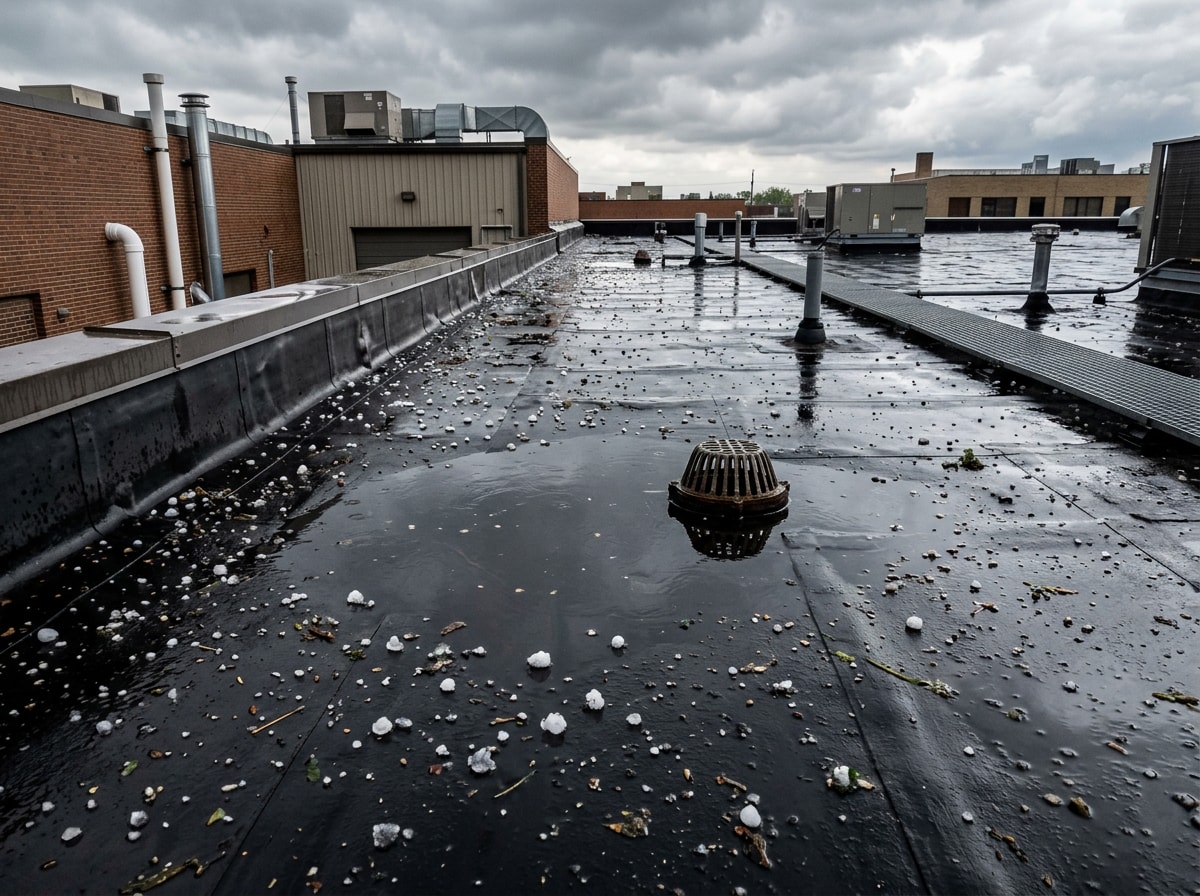
If a recent storm has you worried about hidden damage, our storm damage roof repair team can check seams, flashing, and drainage before a small issue turns into an interior leak.
EPDM Roofing Repair Cost in Springfield, MO
Repair costs vary a lot depending on what's actually wrong, but most jobs fall into one of these categories:
| Repair Type | Typical Cost | Common Cause |
|---|---|---|
| Small puncture or patch | $150 – $500 | Hail, foot traffic, dropped tools |
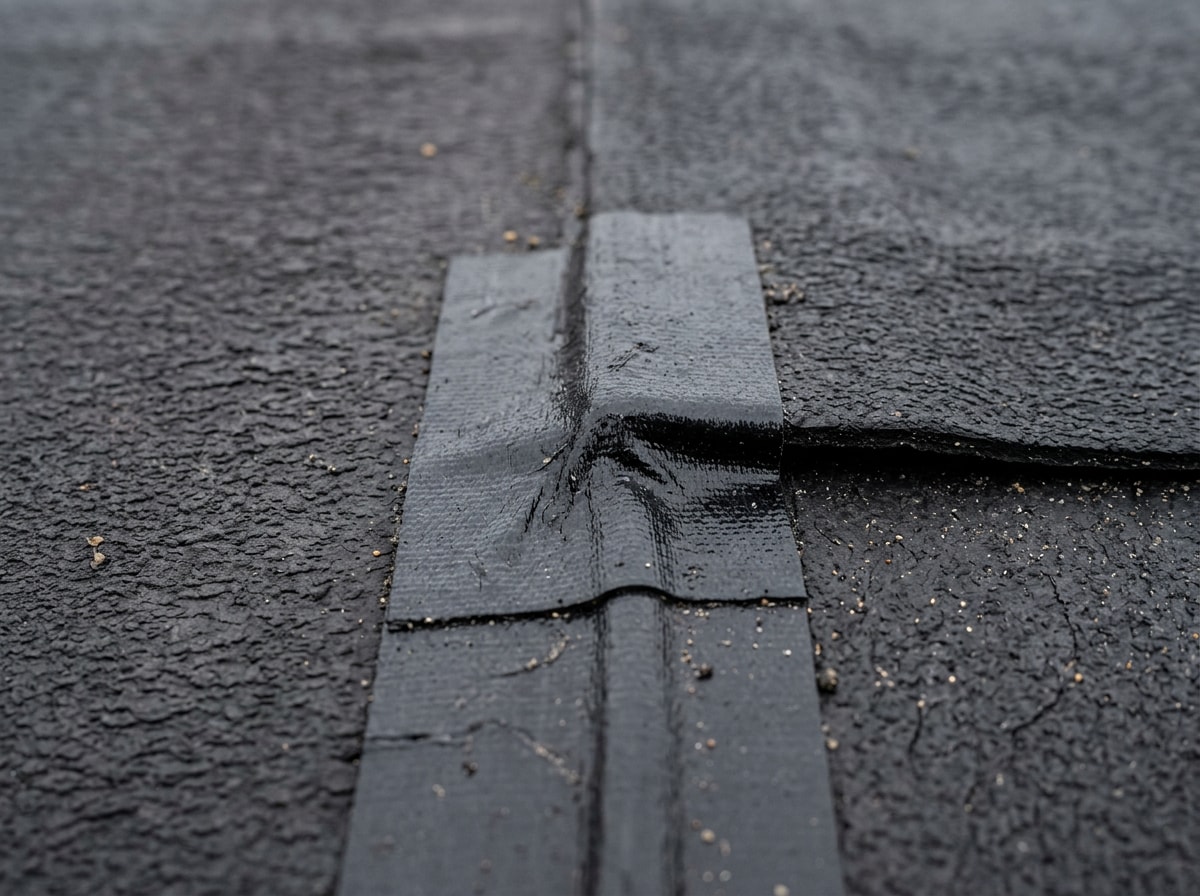
| Seam or flashing repair | $300 – $1,200 | Adhesive failure, thermal movement, age |
| Larger section repair | $800 – $3,000 | Multiple failure points, prolonged ponding |
| Extensive multi-seam repair | $2,000 – $6,000+ | Storm damage, long-deferred maintenance |
Once repairs start stacking up across multiple sections of the same roof, full replacement usually becomes the more cost-effective path rather than repeated patching. If you're dealing with an active leak right now, our emergency roof repair line gets someone out fast; for everything else, a standard roof repair visit can diagnose the scope before you commit to a number.
Pros and Cons of Rubber Roofing
| Pros | Cons |
|---|---|
| Long service life (20-30+ years) | Low impact resistance to large hail |
| Fewer seams means fewer leak points | Black membrane absorbs heat in summer |
| Easy, inexpensive spot repairs | Plain black appearance unless upgraded to white |
| Flexible in temperature swings | Requires a qualified installer for seams and flashing |
| Recyclable and lower embodied impact than some alternatives | Shrinkage/curling possible if poorly maintained |
White EPDM addresses the heat-absorption downside. According to ENERGY STAR, a cool roof can lower a building's air conditioning costs and reduce the surrounding heat island effect, which is worth factoring into the color decision on a Springfield commercial roof baking under summer sun.
Is Rubber Roofing Right for Your Springfield Property?
EPDM is a strong fit for flat and low-slope sections, but it's not the only option. If fire rating, chemical exposure, or a different aesthetic matter for your building, it's worth comparing EPDM against modified bitumen before deciding. Our guide to modified bitumen roofing covers how that system stacks up on cost and durability for similar flat-roof applications.
A few questions worth asking before you sign a contract:
- Does the roof have slope enough to drain, or will water pond regardless of material?
- Does your insurance or local code require a specific fire rating for this building type?
- How much foot traffic or rooftop equipment servicing happens on this roof?
Rick's Roofing installs and repairs EPDM, modified bitumen, and other flat-roof systems across Greater Springfield, MO and the surrounding Ozarks. Browse our full roofing contractor services or visit the homepage to see everything we handle beyond flat roofs. We also serve Springfield, MO property owners directly, start with a free estimate and we'll tell you honestly whether a repair or a full replacement makes more sense for your roof.
FAQ
Is EPDM roofing the same as rubber roofing?
Yes. EPDM is the technical material name; "rubber roofing" is simply the common term people use for the same membrane.
How much does rubber roofing cost in Springfield, MO?
Installation typically runs $4 to $12 per square foot, or roughly $6,000 to $18,000 for a 1,500 square foot flat roof section, depending on membrane thickness and whether tear-off is required.
How long does EPDM roofing last?
Most EPDM roofs last 20 to 30 years. Well-installed, fully adhered systems with properly sealed seams have been documented performing well beyond that under favorable conditions.
What is EPDM roofing made of?
EPDM stands for ethylene propylene diene monomer, a synthetic rubber membrane engineered specifically for roofing durability and flexibility.
Can an EPDM roof be repaired instead of replaced?
Often, yes. If the membrane is still structurally sound, targeted repairs can restore waterproofing around damaged seams, punctures, and localized wear without full replacement.
Why are my EPDM roof seams separating?
Seams can separate due to age, thermal movement, moisture intrusion, or adhesive failure. Once a seam opens, water can spread beneath the membrane well beyond the visible damage.
Is rubber roofing environmentally friendly?
Mostly, yes. Many EPDM membranes use recycled rubber content, and the material is recyclable at the end of its service life, which keeps it out of landfills compared to some tear-off alternatives.
What's the best roofing material for a flat roof: EPDM, TPO, or PVC?
It depends on the building. EPDM is generally the most budget-friendly and easiest to repair; TPO offers a reflective white surface for better cooling; PVC resists chemicals and grease best, making it common on restaurant roofs.